

Controls are the single
largest lever on
operational carbon.
Fabric and plant selection set a building's potential. The Building Management System determines whether that potential is realised every day it is occupied.
Practical engineering,
not green marketing.
Robell does not sell carbon strategies. We engineer the controls that make them achievable — and we are candid with clients about where savings genuinely come from.
In most existing buildings the largest, fastest returns come from correcting control sequences, recommissioning plant and giving operators usable data. Hardware replacement follows only where the existing infrastructure cannot deliver.
Design for demand, not capacity
Control strategies written around how a building is actually occupied — optimum start, sequencing, setpoint reset and demand-led ventilation — rather than running plant to satisfy a worst-case design condition.
Commissioning that proves performance
Most energy is lost between design intent and everyday operation. Point-by-point verification and loop tuning under real load conditions close that gap before handover.
Visibility for the operator
Metering, trending and clear graphics let a facilities team see consumption as it happens, so drift is spotted in weeks rather than at the next annual review.
Optimisation after occupation
Buildings settle. Seasonal revisits and post-occupancy tuning keep a system performing as designed once real people, real loads and real weather are involved.
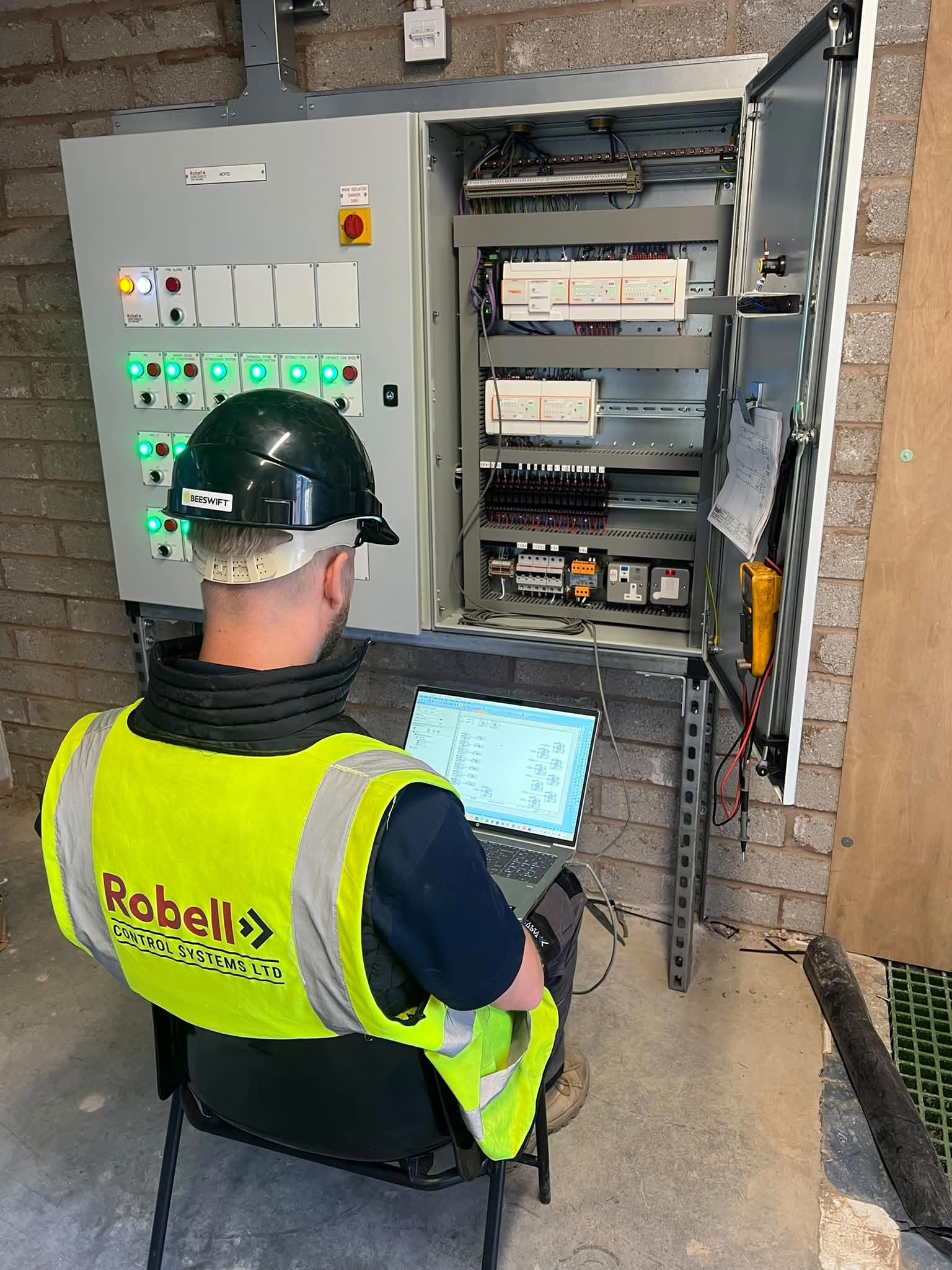
Reporting your ESG
team can actually use.
Where clients need energy or ESG reporting, we structure logging and trending from the outset so data is available in a usable, auditable form from day one of occupation — not retrofitted a year later.
Talk to an engineer